It is the song of the lake shore.
The lake shore is an unresolved margin — littoral, from the Latin litus, meaning shore — belonging to neither city nor lake, surrendered by both, possessed by neither. Where Chicago's grid arrives at the water's edge and simply stops, having run out of names for what comes next.
The lake shore is an invention. Before it was the lake shore it was Michi-gami — Ojibwe for great water — and the Potawatomi moved along its edge by season, not by street. What stands now between the city and the water is not land. It is fill. The rubble of the Great Fire of 1871 cast into the lake, year by year becoming ground. Dredge and debris, decade by decade, the shore pushed eastward into the water. The original shoreline is gone. What you walk on is what the city needed to forget.
The lake shore is city and wild. Permanent and temporary. The fresh water that reads like an ocean — no opposite shore, no salt, no tide. A cemetery that became a park (Lincoln Park: the graves moved, the land consecrated again, differently). Above the thermocline and below it. The plane banking with somewhere to be and the pair of legs in the water with nowhere else to be. The water that holds what it's given and the city that gives and forgets.
The lake shore is moving. The city fills into the lake and the lake takes it back. Water levels rise, the landfill floods, the paths go under, the beaches narrow to nothing. The breakwaters erode. The city extends its seawalls and the water finds the gaps. What was thrown in returns. This is not a border. It is a negotiation without terms, conducted in the language of seasons and the slow pressure of fresh water against whatever the city calls permanent.
The lake shore is where city heat meets lake cold and makes fog from the argument. Where the water is always colder than you expect and colder still below. Where ice in January extends the land into a language the city doesn't speak.
The lake shore is Aaron Montgomery Ward — a dry-goods merchant, which is to say a man who dealt in the ordinary — who sued the city four times between 1890 and 1910 to keep the shore open. The ordinance read "forever open, clear and free to the use of the public." The city built on it anyway. Ward stopped them. He was not loved for it at the time. He is loved for it now, which is how these things go.
These are only my notes.
A place I had always wanted to see. In 2006, entering required a special license from the US Treasury Department. In 2016, and in 2018 and 2020, visiting Cuba was under a general license reliant on promises to comply. It's complicado.
American policy ebbed and flowed across those years — less restrictive, more restrictive, then shifting again — depending entirely on who occupied the White House and what they needed Cuba to mean. It's complicado.
"Cuba isn't the heaven that Fidel will sell you, nor the hell that Bush will tell you it is." — Presbyterian minister, Havana, 2006
"Es complicado." — La Habana, 2016
lesser landscapes of North America
These are the places nobody thought to name. The light was there anyway. Which is to say: I'm not accepting the judgement on what counts as a landscape — I'm just not showing up where I'm supposed to.
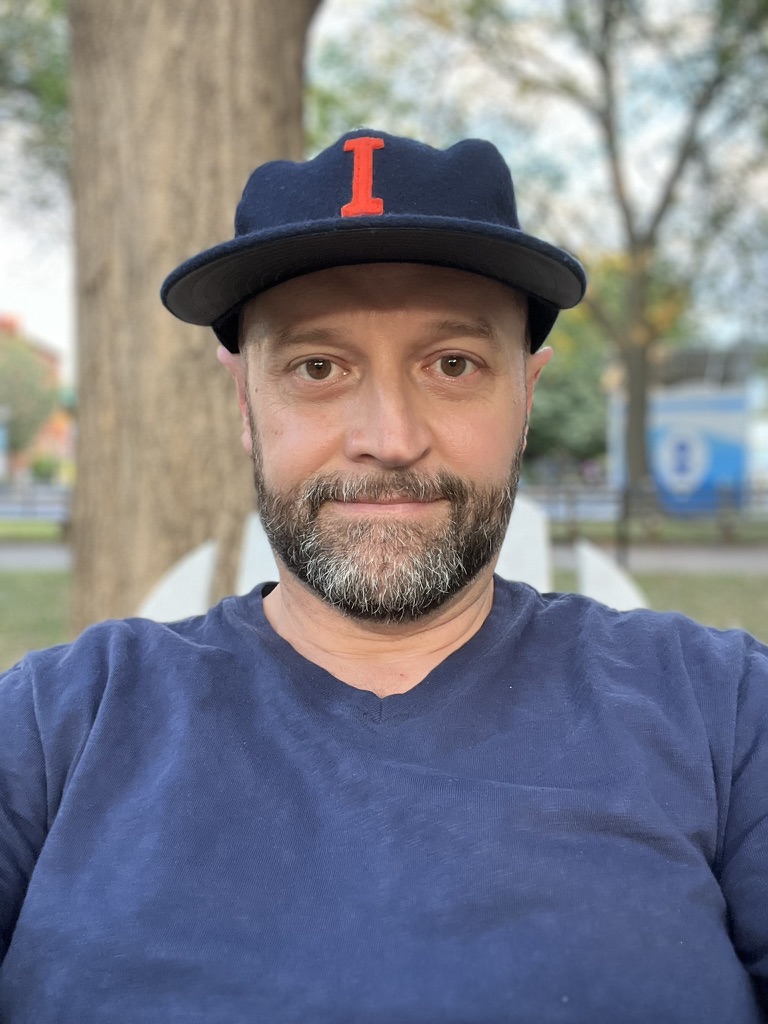
I was born in Mexico. I have lived in Rio, Tokyo, New York, and several places in Pennsylvania, meaning the question of where I am from is complicado. I live in Chicago now, and have for over twenty years, which is to say I live near the lake, which is to say I am Midwestern now. I have two children, who are twins, which is its own kind of complicado.
I have been making photographs since the early 2000s, in the sense that I have been noticing things since then and a camera is how I keep notes. My projects tend toward margins: the edge of a city where the grid runs out, the back of somewhere, the place where two things that shouldn't be touching are touching anyway. Each image is a sentence. I am not sure yet what they are all saying, but I believe they are saying the same thing, and I believe that thing is worth saying. I am not interested in the exceptional. I am interested in the ordinary that turns out to be something else.